CDM 301
Producing a Creative Digital Media Product or Service
Task 1.1
Film Treatment 1
Working Title
Genre
Duration
Natalie
Documentary
3.5 Minutes

Target Audience and Potential Market Position:



Key Scenes:

I think that the aspirer, explorer, and mainstreamer would be interested in watching this documentary. My target audience is young people who want to grow up to be dancers or work in the dance world. Groups like the aspirer and explorer may be interested. Aspirers admire the beauty and glamorous performance element of dance, while explorers are generally young open-minded individuals who like to see others succeed in creative careers.
Project Outline: (100 words min)
The film is called Natalie. It is about the life of a dancer and what it's like to grow up and pursue dance as a career. The film starts by talking about a childhood dancer and progresses onto a career in dance college and finally as a dance teacher. The film is meant to inspire dancers to follow a creative passion even if people think that it is difficult to be successful. Of course, the film will show some failures too, because I want it to be realistic and show what the dance world really has to offer but every success and failure is part of the journey.
I intend to use a combination of a short interview with the dance teacher, where she will talk about her opinions, childhood, past career, current position, and goals for the future. B-roll from dancers at the school. And stock footage from dancers on stage for dramatic effect.
I am going to upload my finished product to my website and all my social media accounts. The documentary will become part of a showreel at the end of my course too.
My target audience is young dancers or maybe parents of dancers who are interested in seeing what is in store for a career as a dancer. The documentary will give them perspective on the reality of the dance industry and what success can look like.
Interviewee Profiles:
Mise en Scene :
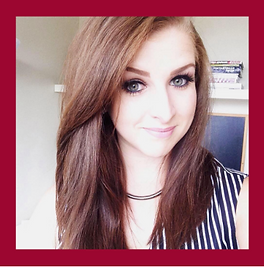
Natalie Canty-Davies, 32. Owner of Natalie White School of Dance, parent, and ex-professional dancer. Attended Bristol College of Dance for technical and practical ability, and to gain DDE qualifications in Ballet, Tap & Modern.
As a choreographer and performer, she built the foundations of her ambitions to become a dance teacher, and one day own her own dance school.
With the confidence and skill gained in dance school, she made it to the final ten for the BBC Andrew Lloyd Webber’s, Somewhere over the Rainbow in 2010.
At the age of 18, she joined Justine Garner School of Dance, and after five years was asked to take the role of ‘Dance Director’. Later, in July 2016, she was given the opportunity to take over the school. Now, she passes on her training, experience, and education to her pupils at Natalie White’s School of Dance.


Supporting Images:


A classical dance form demanding grace and precision and employing formalized steps and gestures set in intricate, flowing patterns to create expression through movement.

A dance in which the rhythm or rhythmical variation is audibly tapped out with the toe or heel by a dancer wearing shoes with special hard soles or with taps.

A dance form or dance that is matched to the rhythms and techniques of jazz music, developed by African Americans in the early part of the 20th century.
Film Treatment 2
Working Title
Genre
Duration
???
Documentary
4 Minutes
Target Audience and Potential Market Position:


Key Scenes:


I think that the struggler and the mainstreamer would be interested in watching this documentary. My target audience is teenage/middle-aged people who enjoy watching physical sports. Groups like the struggler and mainstreamer may be interested. Strugglers enjoy seeing instant solutions to their problems, so they are likely to consume something like wrestling as the story behind each match offers almost instantaneous resolution by fighting the problem. Strugglers may be impatient and disorganised which are qualities we see a lot in wrestling so they can empathise with the characters. I think the explorer might enjoy a challenge, difference, and instant effect. This group is made up of mainly students and approximately 17% of WWE’s audience is under the age of 18. Finally, the reformer because their interests lie in politics and freedom from restriction which is what wrestling is all about. Although, the reformer values time which makes us wonder if boxing would be more or a more suitable sport.
Project Outline: (100 words min)
The film is called ……………... It is about the fans behind pro wrestling and why it has grown to be such a popular sport. It comes from the point of view of a keen wrestling fan from a young age. He shares his knowledge and opinions as to why he thinks wrestling is so popular and why he loves the sport. The film starts by talking about falling in love with the sport in his childhood and progresses onto why it is a sport ever growing in popularity. We ask FAQs such as “why do you enjoy watching such a violent sport?”.
The film is meant to inform the mass and clear up any stereotypes about wrestling being damaging. Of course, the film will feature some footage from local events that I’ve attended, and we will compare them to televised programs. I intend to use a combination of short clips from events the interviewee has attended and aim to record crowd reaction to represent the atmosphere fairly.
Interviewee Profiles:

Ethan Jarrett-Barnes, 20 media student currently studying at Plymouth university on a 3 year media course.
In 2019 he completed his GCSEs and moved forward to complete a level 3 diploma in games technology at Access Creative college. Has interests in writing reviews, video editing, politics, and of course wrestling.
In his teenage years, he attended many wrestling events live in Bristol, and the surrounding area. He has a small collection of merchandise from these events and he continues to grow his collection.
At the age of 20, he now hopes to finish his 3 year course in media and go on to be successful in an area of the media industry.

Mise en Scene :

Lucha Libre is one of the most popular styles of wrestling in America.
The first Lucha libre match was even held in Mexico City..
Lucha libre is known for its crazy moves and high-flying style of wrestling.
Wrestlers use their bodies to create an advantage for themselves.
They are known to use extreme moves such as “escapes” where the wrestler flips over the opponent’s body then uses his legs to grab onto the ropes and flip them back into his opponent’s face or roll his body back into an opponent’s legs, forcing him to release his grip on the ropes
Puroresu is ring-style wrestling that is native to Japan.
It is a martial art that focuses on a particular style of wrestling called “catch wrestling” where it emphasizes submission holds.
The main difference between Puroresu and Lucha Libre is the way the wrestlers perform their moves.
Unlike American wrestlers who perform their moves from a standing position, Japanese wrestlers will often use an elevated ring to take advantage of the fact that they are farther away from the ground.


Hardcore wrestling, also known as "deathmatch" wrestling originated in Japan.
Deathmatch wrestling has a very niche audience due to the blood and violence, but promotions such as Game Changer Wrestling have shown there is a market or the ultraviolent side of professional wrestling.

Task 1.2
Production Planning
Mindmap


Moodboard


Project Outline
The film is called Natalie. It is about the life of a dancer and what it's like to grow up and pursue dance as a career. The film starts by talking about a childhood dancer and progresses onto a career in dance college and finally as a dance teacher. The film is meant to inspire dancers to follow a creative passion even if people think that it is difficult to be successful. Of course, the film will show some failures too, because I want it to be realistic and show what the dance world really has to offer but every success and failure is part of the journey.
I intend to use a combination of a short interview with the dance teacher, where she will talk about her opinions, childhood, past career, current position, and goals for the future. B-roll from dancers at the school. And stock footage from dancers on stage for dramatic effect.
I am going to upload my finished product to my website and all my social media accounts. The documentary will become part of a showreel at the end of my course too.
My target audience is young dancers or maybe parents of dancers who are interested in seeing what is in store for a career as a dancer. The documentary will give them perspective on the reality of the dance industry and what success can look like.
Production Schedule

Equipment/ kit that i will need for the upcoming shoot!
Budgeting


£453.50


Legal & Ethical
The documentary will be filmed in a space with many children whose parents might not be comfortable with their kids' faces being online, so I will need to get permission from every student that I film.
During the interview, if there are any questions that the interviewee does not feel comfortable answering, I need to make sure that they know they don’t have to answer and that it’s okay to move on.
Nearing the end of the editing process, I'm going to show the final draft to the interviewee to ask them if they feel they are being represented fairly or if there are any final changes they want to make. It’s important to remember that you are cutting perhaps an hour's worth of footage down to just 5 minutes and those 5 minutes need to be concise but fair.
If at any point after filming the interviewee decides that they said something which they don’t want to be part of the documentary, then you need to respect that and make sure that you are not using that footage.
Once you have set up the camera, take a test shot and show your interviewee what the shot looks like to make sure they are happy with the setup.

We have a biannual dance show at the school. Filming is not allowed during the dance show, a professional photographer is hired to record and take photographs to be sold. As it’s not my footage, I’ll have to ask permission to use a short clip from the DVD. But ideally, I’d like to contact him for some of the original footage as the DVD quality is not great and the original footage would be 1080p. If I do use any footage that isn’t mine, I must credit the creator in the end credits.
I can only use archive footage that already exists on the internet. Unless I have permission from everyone who is in the image/video. If I don’t have permission, I can still use the footage but I'll blur out others.
Section one: Protecting the under-eighteens
The involvement of people under eighteen in programmes
1.28: Due care must be taken over the welfare and the dignity of people under eighteen who take part or are otherwise involved in programmes. This is irrespective of any consent given by the participant or
by a parent, guardian, or other person over the age of eighteen in loco parentis.
1.29: People under eighteen must not be caused unjustified distress or anxiety by their involvement in programmes or by the broadcast of those programmes.
Ofcom rules that I need to be mindful of:
Section seven: Fairness
7.1: Broadcasters must avoid unjust or unfair treatment of individuals or organisations in programmes.
Section eight: Privacy
Private lives, public places, and legitimate expectation of privacy
8.2: Information that discloses the location of a person’s home or family should not be revealed without permission, unless it is warranted.
8.4: Broadcasters should ensure that words, images, or actions filmed or recorded in, or broadcast from, a public place, are not so private that prior consent is required before broadcast from the individual or organisation concerned unless broadcasting without their consent is warranted.
8.6: If the broadcast of a programme would infringe on the privacy of a person or organisation, consent should be obtained before the relevant material is broadcast unless the infringement of privacy is warranted. (Callers to phone-in shows are deemed to have given consent to the broadcast of their contribution.)
8.8: When filming or recording in institutions, organisations, or other agencies, permission should be obtained from the relevant authority or management, unless it is warranted to film or record without permission. Individual consent of employees or others whose appearance is incidental or where they are essentially anonymous members of the general public will not normally be required.
8.9: The means of obtaining material must be proportionate in all the circumstances and in particular to the subject matter of the programme.
8.10: Broadcasters should ensure that the re-use of material, i.e. use of material originally filmed or recorded for one purpose and then used in a programme for another purpose or used in a later or different programme, does not create an unwarranted infringement of privacy. This applies both to material obtained from others and the broadcaster’s own material.
Pitch & Pitch Feedback


Use the arrow to scroll through the slides
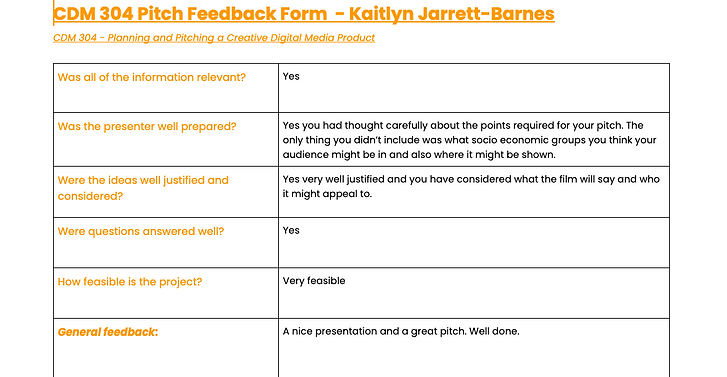
I presented my pitch to the tutor to talk through my plans for the shoot and to answer any questions or solve any problems. I have a written pitch feedback form which I have added below. Unfortunately, the recording was lost but I will base my evaluation of the project on the feedback form given instead.
Test shoot
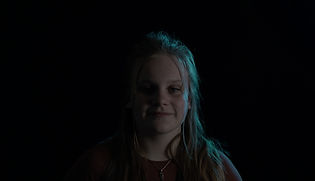
I attended a workshop where I practised setting up the camera and lighting a person for an interview in a flattering way using three point lighting. Although I do not have any images from behind the scenes, here are the outcomes of the lighting workshop on three point lighting. They show how a person can be lit by using a key light, a fill light and a backlight. And the effects of removing one of the light sources.


Risk Assessment


Final Outcome

Here are a list of all the relevant risks which I think could become an issue during filming on location. There are also ways presented on the sheet as to how I intend to prevent these from happening to the best of my ability.

Recce

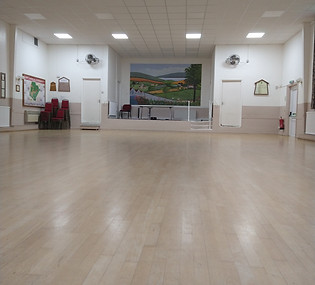
At the time of the recce, I did not realise that we would be in a different hall in the building. I therefore only have images of the room next door to the one we used for filming. I feel as though the footage may have come out better if we were in this room because of the amount of natural light that was let in. It also would have allowed us to use ballet bars in the backdrop which was the original plan as it isn't a distracting feature and it is relevant to the topic of the documentary. Below is a document of the features of the hall that we did end up using. But I have also included the photo from the recce I did in the other hall as it is still a useful piece of evidence. It was not completely necessary to perform a full recce beforehand anyway, as I attend the dance school myself and I know the space very well, including potential problems with it.
Task 1.3
Evaluation of Post production
I began this project in January of 2023. I have learned so much about post production since then and my evaluation reflects on that.
I would like to say that I began by reviewing all my footage and grading it from most usable to least usable as I do now, however this isn’t the case.
All of my footage which I shot remained in one folder on an SD card taken from the camera which I was shooting on. This is fine, although I will need to move it in the future to make sure that I have enough room for future projects on my SD card. I now realise, after running out of space on that card while working on a horror film project that SD cards are not meant to be permanent storage. That’s where the role of the harddrive comes in, for backing up all of your files.
So what did I actually do first? Well, I did go through and review all of my footage from the interview and some excess B-roll. I organised it as one lump sum into a folder on my SD card. Any stock footage, or external assets were saved on my harddrive but were not organised into ‘music, footage, images’ or anything like that. Every file I had to do with the documentary project was all dumped in one place on my harddrive.


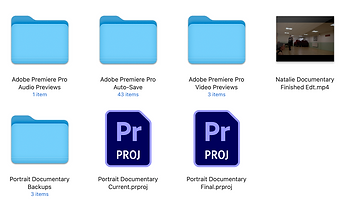
Because of this, when I came back 5 months later to finish my edit in June, there were files missing when I tried to open the project and I had a hard time relinking all of the media as it wasn’t named properly. For example, images that I had used were just named ‘screenshot_3456973645723’ which made it quite hard to know which image was which, especially because I had started the project months ago.
So, the very first thing that I did when I came back to my project was retitle each clip and organise all of my media, including that of all my other projects into their own separate folders and sub folders. As pictured below, this is the best thing I could have done for the efficiency of my post production workflow.
There were definitely some difficult post production decisions to make. As you can tell, the duration of my final edit is just over 8 minutes long when the brief was a portrait documentary which ran for 5 minutes. I had recorded 40 minutes worth of Interview footage and because of my personal connection to the project, I struggled to cut out unnecessary parts of the media.
Another thing I learned was the Importance of a second opinion. For example, I watched my documentary back and I was satisfied with the cuts that I had made. However, when I had a second opinion from my tutor he knew that there were parts which didn’t need to be there and could have been cut out without ruining the quality of the story. Had I asked for his feedback earlier, I would have known this and been able to act on it, so that my documentary was fitting to the brief requirements.
On the topic of second opinions, this is how I arranged my timeline. Interview footage audio was on A1, music was on A2 and B-roll was on the line A3. In my mind this was a clear way to set out my work but when I presented my timeline to a friend who wanted to input on the project (they had experience in editing before) they couldn’t understand the layout.

Since they find the way I work so confusing, in the future, if I am working on a project as a team, I will discuss beforehand the way the team feels that the timeline should be laid out so that there is no confusion when it comes to editing the same film as part of a team. I will use sequences more frequently too, to try and compress my film into less tracks.
Personally, I am still very satisfied with the content of the video even if it may be too long. I think that the cuts I made (173 in total) were able to tell the story effectively. Coming back to the project helped with this massively. I was able to take a step back from the story, and return to the project when I had upskilled myself in the premiere pro software as well as my storytelling skills. Initially, I found it hard to make the documentary progressive, and I have reflected on why I think this happened in my evaluation of the production process.

I arranged my screen in this way (see picture). On the right side of my screen I had my program monitor and on the left, I had my timeline to edit from. This arrangement was a very effective way to see exactly what I was changing while also giving me room to make edits on my timeline. It was a great way to increase the rate of my work and I carried this on throughout my entire post process.
I discovered autoducking during the production of this project which I thought would be useful in ducking my music when the interviewee was talking, although this feature is relatively new and I found that it didn’t work effectively for the use case that I needed. So,I manually ducked and EQ’d each piece of music over her voice, to change volume when she wasn’t talking (see image for audio edits). I think this turned out to be effective because it added some interest when she wasn’t speaking.

Another thing which I want to talk about is colour grading every clip. I was able to do this to a high standard by removing the yellowish tint from the overhead lights in the room using basic correction and applying saving as a preset. In doing this, I could then apply this preset to every clip on the timeline using an adjustment layer over the top of every video which was very useful to me as it allowed me to make changes later if I wanted to. I will definitely take this skill into future projects as it was an effective way of applying a colour grade non-destructively. Having said that, I do wish that I had colour graded before cutting all the clips, only because I could have applied the grade all at once rather than on top of every cut but this is a minor fix that I will bear in my moving forward.
Something which I think I did really well in this project was the way that I used relevant B-roll to the subject that she was talking about. At the same time, I felt like enough of the interview was kept in to really see the expression in her eyes and the passion for dance in her body language. Also the addition of motion graphics at the beginning and end of the video sets up the edit for success.

Nearing the very end of post production I almost lost my entire edit. All of the hours of work which I had put in was almost gone because of the way I handled the files. Because I started this project in January and have only just been able to finish it, I wasn’t responsible with the way that I backed up my project, being relatively new to the course in January. After almost losing all my hard work, I have now learned how to make backups of my files and manage the way that my files are arranged across multiple harddrives so that this never happens again.
Graphics I used in the first opening scene were tedious and time consuming to keyframe frame by frame but they did give effective results which stood out from the rest. Every person who watched my documentary made a point of commenting on this aspect, so I think that it was definitely helpful in increasing the quality of my work. It gives a strong creative opening for the rest of the documentary and I don’t regret taking the time to learn how to do it. In fact, I had to use the same skill set at the end of the video, when I keyframed the curtains opening to black (see picture) so my time learning this was time well spent.


The issue was that I ran out of disk space on my computer causing Premiere Pro to force quit my project while I was trying to render it. This resulted in my file being corrupt. Luckily, there was an old save file which I managed to recover but that is besides the point. The disk space ran out because I had thousands of files and duplicate files which needed to be arranged into their corresponding folders and I am happy to say that this has been done now.
The last thing I want to say is how well I think I managed to save and render my project so that it didn’t buffer and so that there were always recent saves in case premiere decided to crash again. By saving it constantly, it ensured that I would only lose 5 minutes of work compared to a whole day of work.
Overall, I am really happy with the final outcome, as is the client which was my aim for this project. The process took much longer than expected because of problems I faced along the way, but I was able to fix them to a good standard in post production.
Final Portrait Documentary
Task 1.4
Evaluation of Production
During this documentary, from pre-production through to post production and the final edit, I encountered quite a few problems which I needed to resolve. Having said that, I’ve learned more from this project as a whole than from any other piece of media that I’ve needed to create. I’ve learned how to use B-roll effectively and more importantly how to film useful and effective B-roll relevant to the documentary. I’ve also learned how to pace a documentary and how to tell someone’s story. I had to teach myself how to animate text and use graphics which fit the tone of the documentary overall. And finally, I’ve learned the importance of balancing my time so that I am not rushing to finish my documentary and possibly sacrificing some of the quality of my work. But still, what I love about this project is that I still have things to learn and improve on.
When it came to shooting B-roll which you can see at the beginning of the documentary, I forgot to bring my SD card to the shoot. This massively delayed filming, which meant that I missed out on some footage. Not only this, but because the footage was taken at night so the room was lit poorly. In post production this made much more work for me when it came to colour grading for a clear image.
Unfortunately, even when I’m reflecting on the poor quality of the lighting I can’t think of another way to solve the problem because of the time of the shoot. The class which I was filming was always scheduled in the early evening which would have been fine in the summer but as the shoot was in January, the days were short and it became dark very early on. The only way to solve this would be to light the room with separate lights in addition to the overhead lights to try and take away from the very yellowish tint of the overhead lights already in the room. The lights I would need to light up such a large room would need to be larger than the ones I have access to so I think this problem is unavoidable unless the documentary is filmed at a different time of year.
Another improvement on lighting would be the interview lighting. I absolutely love the setting (background) for my documentary because I think it is simple but still has some interesting elements in there. The only thing I wish that I had changed was the fact that on the day of the shoot I decided not to use lights on the interviewee at all, considering the amount of natural light was enough to light her up with the camera settings I had chosen. And to a certain extent it was. The only problem I had in post was then the fact that the focus of the eyes were pulled to the window outside, because of the difference in brightness between the window and her face. I was able to fix this to a certain extent with colour grading. But I feel that if I had lit her more in the Interview itself, the brightness would have balanced itself out.
Now that I have talked about a few negatives, I would like to reflect on a positive thing which I did in production. Firstly, I did not need to perform an official recce, because I attend the dance school myself and I was very familiar with the location. This made preparing for the shoot much easier, in terms of knowing what kit I was going to need. Furthermore, I love the fact that I knew the interviewee, making the whole process not only much less awkward in filming, but also enabling me to ask for B-roll which I might not have been able to get if I were to Interview someone I didn’t know.
As well as this, because of my choice of client and the fact that she owned a dance school, it gave me plenty of footage from the dance school’s facebook page to display as B-roll which I was able to use to my advantage really effectively. It was so effective because it was relevant and personal to the dance school that she had worked so hard to build.
The last thing I would like to talk about is the questions I asked in the interview. I think that they were really relevant to the portrait documentary and I really thought them through before the date of the interview to ensure that they were personal questions to her as the brief was a portrait documentary. I did not want to make all my questions about the dance school as although this is an important aspect of her career, it is not the only element of her life. Questions that I chose were cleverly aimed to point the conversation in a particular direction too, while aiming to still keep on topic.
When creating a story, I struggled at first. But when I returned to the project 5 months later I realised what I had been missing the whole time. I watched the Interview back once again and realised that I needed to play off of her warm bubbly personality. The Reason why I was finding it hard to build a story in the first place was down to the fact that I didn’t record a sadder line of dialogue. But after coming back, I noticed that I didn’t need her to be sad at all. In fact, that would have been out of character for her and perhaps not fit the tone of the rest of the documentary.
All I had to do was contrast her bubbly personality with a progressively sad but also optimistic section which I could make myself. Then I would return to her after the climax of the uplifting section. The whole composition of the story came together really well and overall I couldn’t be happier with it. I believe that it really gives the watcher a sense of who Natalie is as a person and why she chose her career which is the whole idea behind the documentary.
If I were to repeat this project I would take more B-roll and make sure that it is relevant to the subject that is being talked about by reviewing the interview footage first. By listening back to the interview, I’d have an idea of what I needed to gather footage for, for example an establishing shot of an exterior of the dance hall which would help rather than relying on still images from google. I’d also be more prepared when it comes to setting up a camera beforehand and checking that the sound is recorded correctly, simply because the quality of the footage I had was not the best and I felt rushed to set up.